Showing posts sorted by relevance for query total factor productivity. Sort by date Show all posts

Sunday, March 7, 2021

Which governments can get out of the way of growth?

John Cochrane reminds us to keep our eyes on the prize:
In the long run, nothing else matters. GDP buys you health, advancement of the disadvantaged, social programs, international security, and climate if you are so inclined. Without GDP, you get less of all.  Economic policy should have one central goal -- get productivity growing again, or (in my view) get out of the way of its growth. This is the one little hope that has not been let out of the policy Pandora's box, focused on everything else right now.

Macroeconomists classify two basic types of growth:  

  • More inputs (labor, capital) lead to more output (GDP)
  • Technological progress (Total Factor Productivity) increases output for the same level of input.


And here is the change in Total Factor Productivity across countries.  


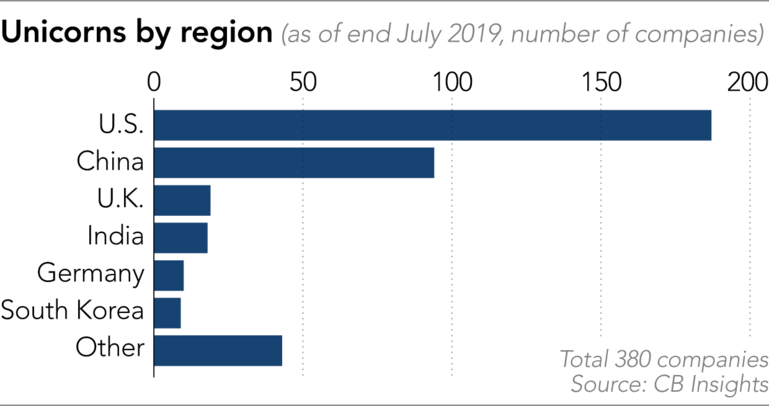
We have blogged about the dearth of unicorns in the EU,
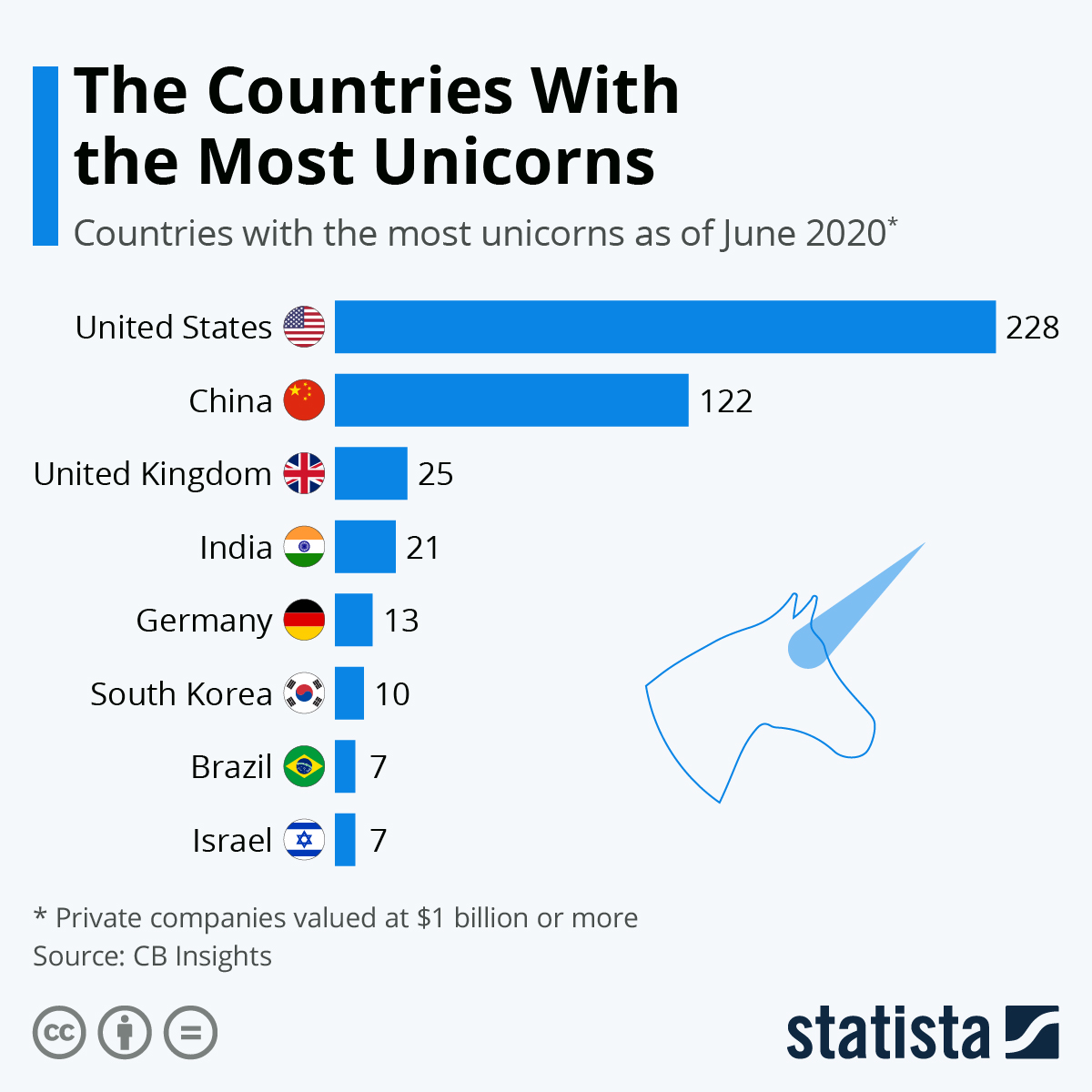
  Infographic: The Countries With the Most Unicorns | Statista 
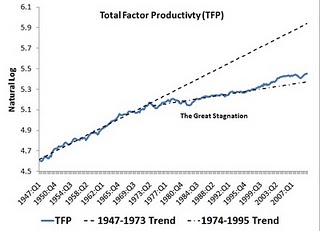
Total Factor Productivity seems to be telling the same story.


Tuesday, June 22, 2021

New Unicorns suggest fast pace of innovation!

Two popular innovation metrics are total factor productivity the difference between output (like GDP) and the inputs (like capital and labor) used to produce it, or the number of unicorns, startups that reach a $1B valuation.  While total factor productivity seems rather flat, 


the number of unicorns seems to be accelerating.


The US seems to account for about half of them, maybe due to its tolerance for inequality, and light-handed regulation.  


Unicorns are concentrating in several US cities, sometimes called "innovation clusters."


 More posts about unicorns and innovation

HT:  Elad Blog

Saturday, April 10, 2021

Does venture capital still contribute to growth?

The New Yorker has a harsh critique of some Venture Capital firms, like the ones that funded WeWork: 
 A widely read summary by a Harvard Business School professor, Nori Gerardo Lietz ... exposed WeWork’s “byzantine corporate structure, the continuing projected losses, the plethora of conflicts, the complete absence of any substantive corporate governance, and the uncommon ‘New Age’ parlance.” At the same time, she wrote, the S-1 (Disclosures to the regulators about the company's financial health ) failed to provide many conventional financial details. ...S-1 laid bare a basic truth: WeWork’s dominant position in the co-working industry wasn’t a result of operational prowess or a superior product. Instead, WeWork had beaten its rivals because it had access to a near-limitless supply of funds, much of which it had squandered on expensive furniture, flamboyant perks, and promotions luring customers with below-market rents.

Anyone who reads this blog knows three things:

1.  Innovation drives growth, and growth is almost everything.  

As Novel laureate Robert Solow said, “Adding a couple of tenths of a percentage point to the growth rate is an achievement that eventually dwarfs in welfare significance any of the standard goals of economic policy.

2.  Total Factor Productivity (the output measured relative to the inputs required to produce it) has grown much faster in the US than elsewhere.  This is one of the best aggregate measures of innovation.  


3.  The US has birthed more Unicorns (startups with a $1B valuation) than any other country else:


BOTTOM LINE:  Innovation is hard to measure, but it looks like the US has it, so the Venture Capitalists who fund it must be doing something right.  One cannot condemn an entire industry using a few anecdotes about how some startups fail--no matter how spectacularly.