- Anti-Fragile , by Nassim Taleb (also Fooled by Randomness, Black Swan)
- Randomistas: Fighting Poverty with Science by Esther Duflo
- Rationality: What It Is, Why It Seems Scarce, Why It Matters by Steven Pinker
- Enlightenment Now: The Case for Reason, Science, Humanism, and Progress by Steven Pinker
- Everybody Lies: Big Data, New Data, and What the Internet Can Tell Us About Who We Really Are by Seth Stephens-Davidowitz
- Prediction Machines, Updated and Expanded: The Simple Economics of Artificial Intelligence by Ajay Agrawal , Joshua Gans
- Chaos Monkeys: Obscene Fortune and Random Failure in Silicon Valley, link
- Amazon Unbound, Why is Bezos such an Extraordinary Manager?
- Randomistas
- Algorithms to Live By
- Factfulness
- The Art of Strategy
- Shoe Dog
- An Economist Walks into a Brothel
- Sapiens
- Dataclysm
- Rising Strong (squishy, but good)
Showing posts with label Book review. Show all posts
Showing posts with label Book review. Show all posts
Thursday, December 14, 2023
Book recommendations (in no particular order)

Wednesday, March 1, 2023
Blinkist is an efficient way to consume non-fiction books
I spent this morning listening to book summaries (non fiction only) on Blinkist. I put it on my phone so I could listen while I ran errands, and listened to a summary of a book I had read before, “Sapiens” by Harari (highly recommended). I found it really good as it clearly summarizes the main themes, some of which I had forgotten, in a very understandable and interesting way. Liked it so much that I listened to summaries of two other books Harari had written. Am on a seven day free trial, r and suspect I will subscribe (100/year) at the end of the week.
Monday, October 24, 2022
Book Review: Chaos Monkeys:
Chaos Monkeys, Obscene Fortune and Random Failure in Silicon Valley is an autobiography of a Physics PhD from Berkeley who:
- Went to Goldman Sachs to model credit derivatives;
- Founded a startup to be the Goldman Sachs of online ads: instead of moving companies to their highest valued uses it moved ads to the best content .
- Created FBX (Facebook Ad Exchange) that allows advertisers to bid for targeted users.
The NY Times begrudgingly gave it a good review (they were able to look past the self-interested behavior the book celebrates and satirizes) because of its "educational value." The book teaches readers:
1. To anticipate opportunistic behavior caused by the incentive conflicts between entrepreneurs, angel investors, and venture capitalists.
2. To understand how ad exchanges (i) find the highest-value ads for each piece of content, and (ii) find the highest-value content for each ad.
3. How (not) to navigate the internal politics of Facebook, as it moves from a small startup ("move fast and break things") to a mature bureaucracy (self-interested bureaucrats), in a fast-changing environment.
Useful tips for those working at startups:
- Acquisitions are mainly about people, not ideas or technology. Any acquired technology will require continuous updating, so the people who can do that are more valuable than technology they create.
- Negotiate your stock bonus vesting schedule: the longer it is, the less value it has because it "locks you in" to one company, regardless of whether that is your highest valued use
- Facebook's "one ask" policy on office romances. To avoid creating a hostile work environment for the few women who worked at Facebook, it allowed employees only one time to ask another employee out. If (s)he says "no," and you ask again, HR comes knocking.
I found the book informative, a fun read, and loved the surprising ending. Highly recommended.
Monday, August 15, 2022
Departing FTC Commissioner plugs coauthor's book

A plug from a departing FTC Commissioner seems more significant than from one just starting out. Interview with Noah Phillips (link):
The best thing I have read recently is Greg Werden [career economist at Department of Justice, Antitrust Division], Foundations of Antitrust, ..is... so well written. It’s so readable. Right? A lot of the stuff I do is not particularly readable, but I think his book is terrific.
PS. The photo above is of John Sherman of the Sherman Antitrust Act, brother of William T Sherman of Civil War fame.

Thursday, July 14, 2022
The world is getting much better with less inequality
:format(webp):no_upscale()/cdn.vox-cdn.com/uploads/chorus_asset/file/13743810/world_population_in_extreme_poverty_absolute.png)

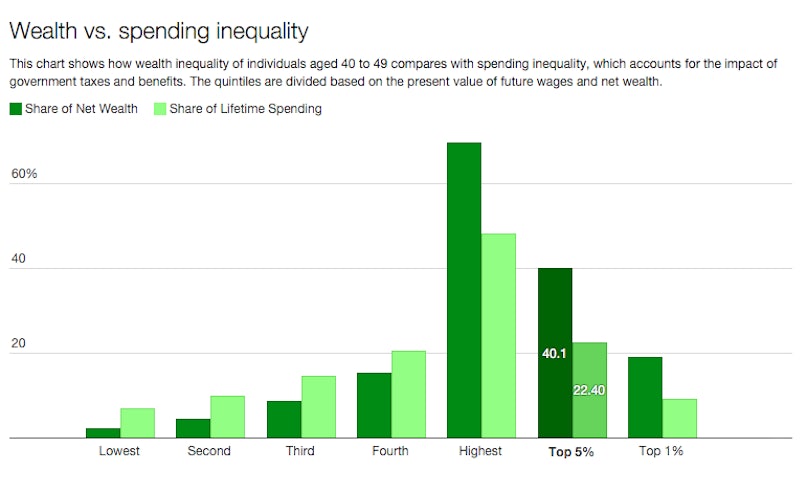
Steven Pinker, Enlightenment Now: The Case for Reason, Science, Humanism and Progress, shows how the world is getting much better (income, longevity, happiness, with less inequality) and why we don't realize it. the last graph shows the effects of our progressive income taxes (rich people pay more) and our redistribution programs (welfare, social security, medicare): consumption is more equal than income.
Wednesday, May 25, 2022
The importance of a mom's high school education
MarginalRevolution.com has a good summary of the evidence in a book review of The Parent Trap. Among the insights:
Hilger argues that racism does play an important role in explaining Black-white wage differentials but it’s the historical racism that made black parents less skilled and less able to pass on skills to their children. In the twentieth century, Asians, Hilger argues, were discriminated against in the United States at least much as Black Americans. But the Asians that came to the United States had high skills while the legacy of slavery meant that Black Americans began with low skills. Asians, therefore, were better able to overcome discrimination. The success of Nigerians and Jamaican immigrants in the United States also speaks to this point. (Long time readers may recall that in 2016 I dubbed Hilger’s paper on Asian Americans and Black Americans the Politically Incorrect Paper of the Year .)

The implied causal link in the graph above is from the mom's high school education ==> child's education ==> income.
As you can see there is an effect but it is almost all from the mother going from having less than a high school education to graduating high school (11 to 12 years). In contrast, the mother can move from graduating high school to having a PhD and there is very little change in the education level of an adoptee.
Saturday, September 25, 2021
Why is Bezos such an extraordinary manager?
Reading Amazon Unbound by Brad Stone, his second bio of Jeff Bezos and Amazon, which picks up where The Everything Store left off. In the book, Bezos punishes managers for wasting time on small incremental--and successful--projects.
It is as if Bezos recognizes the perverse incentives created by ordinary managers, who punish employees for making the more-visible Type I errors (doing something that they shouldn't), rather than the less-visible Type II errors (failing to do something they should). Typically this kind of reward asymmetry leads to fewer Type I errors but more Type II ones.
But in an innovative environment, Type II errors typically have bigger costs, so it is incumbent on managers to find a way to avoid them. So Bezos rewards managers who fail spectacularly in pursuit of something big and punishes those who succeed at timid, incremental change.
Friday, August 6, 2021
Training Artificial Intelligence to not discriminate
The top book review on Amazon reduced Prediction Machines to three propositions:
- Artificial Intelligence (AI) is mostly about prediction
- The cost and price of prediction is falling,
- This will increase demand for complementary skills, like judgement and decision making.
As the cost of developing predictions has fallen, tremendous innovation has followed. For example, AI can identify tumors with much greater accuracy than humans.
Whatever the algorithms were seeing, they saw it clearly. The software could still predict patient race with high accuracy when x-rays were degraded so that they were unreadable to even a trained eye, or blurred to remove fine detail.
To see how this could create problems, imagine training AI to diagnose and treat patients. And imagine that the training set reflected the racial disparities sometimes associated with healthcare, i.e., minorities are under-treated or under-diagnosed relative to non-minorities. With such a training set, the AI would "learn" to continue the disparate treatment.
The director of medical imaging research at Royal Adelaide Hospital, calls AI's ability to recognize race “the worst superpower.”
Thursday, February 4, 2021
Ironically, advances in AI increase the value of human judgement
Written by three economists, Prediction Machines analyzes the potential of AI and as a fall in the cost of prediction. The top review on Amazon reduced the book to three propositions:
- AI is mostly about prediction
- The cost and price of prediction is falling,
- This will increase demand for complementary skills, like judgement and decision making.
While accurate, the review does not do the book justice. Most interesting is the taxonomy of the different kinds of uncertainty: (known, knowns), (unknown, knowns), (known, unknowns),( unknown, unknowns). From a review:
Building on Donald Rumsfeld’s oft-repeated taxonomy of known knowns, known unknowns, and unknown unknowns, the trio of economists add another category: unknown knowns.[7] For Agrawal, Gans, and Goldfarb, known knowns represent a sweet spot for artificial intelligence—the data are rich and we are confident in the predictions.[8] In contrast, neither known unknowns nor unknown unknowns are suitable for artificial intelligence. In the former, there are insufficient data to generate a prediction—perhaps the event is too rare, as may often be the case for military planning and deliberations. In the latter, the requirement for a prediction isn’t even specified, a situation described by Taleb’s black swan.[9] In the final case of unknown knowns, the data may be plentiful and we may be confident in the prediction, but the answer can be very wrong due to unrecognized gaps in the data set, such as omitted variables and counterfactuals that can contribute to problems of reverse causality.[10]
This last problem is illustrated by the story of an early AI/Chess program. After analyzing thousands of chess games played by humans, the program began sacrificing its its Queen after only a couple of moves. In human games, sacrificing the queen usually lead to checkmate in only a few moves. This is a classic mistake, confusing correlation (losing your queen often led to victory) with causation (humans only sacrifice a queen only if doing so would lead to checkmate.
Here is a good summary: .
Too often in the public discourse, artificial intelligence is portrayed as magical fairy dust that should be applied liberally to our most challenging problems. Agrawal, Gans, and Goldfarb’s Prediction Machines dismisses this fallacy. Although written for a business audience, its insights are not confined to the boardroom. Prediction Machines provides a compelling, fresh perspective to help us understand what artificial intelligence is and its potential impact on our world. The text is essential reading for those grappling to make sense of the field.For Agrawal, Gans, and Goldfarb, artificial intelligence is simply a prediction machine—it uses information we possess to generate information we do not possess. This simple realization immediately refocuses contemporary discussions and guides fruitful development of artificial intelligence. It underscores the situation-specific nature of its data and tools. It discloses its fallibility. And it reveals the role of predictions in our decision process, not as determinants but rather as inputs that must be evaluated according to our uniquely-human judgement. According to the three economists, that is the “most significant implication of prediction machines”—they “increase the value of judgement.”[31]
Tuesday, October 13, 2020
Book Recommendation: The Art of Strategy

Just started reading The Art of Strategy, and am already hooked. The first chapter alone is a great intro to how game theory can inform strategic decisions, where payoffs depend not only on what I do but what my rival does. Really well written!
Friday, February 21, 2020
Homelessness, inequality, and segregation are a housing problem
NY Times article based on Golden Gates: Fighting for Housing In America
Nearly all of the biggest challenges in America are, at some level, a housing problem. Rising home costs are a major driver of segregation, inequality, and racial and generational wealth gaps. You can’t talk about education or the shrinking middle class without talking about how much it costs to live near good schools and high-paying jobs. Transportation accounts for about a third of the nation’s carbon dioxide emissions, so there’s no serious plan for climate change that doesn’t begin with a conversation about how to alter the urban landscape so that people can live closer to work.
When it was Ms. Trauss’s turn to speak, she argued that the entire notion of public comment on new construction was inherently flawed, because the beneficiaries — the people who would eventually live in the buildings — couldn’t argue their side.
What this suggests is that the real solution will have to be sociological. People have to realize that homelessness is connected to housing prices. They have to accept it’s hypocritical to say that you don’t like density but are worried about climate change. They have to internalize the lesson that if they want their children to have a stable financial future, they have to make space. They are going to have to change.HT: MarginalRevolution.com
Friday, February 14, 2020
MBA's need econ as it teaches you how to think, not what to think
Business majors performed very poorly across the board, including in economics. Econ majors did the best overall. Economics is a broad field by nature, and econ professors have been shown to apply the reasoning principles they've learned to problems outside their area. Chemists, on the other hand, are extraordinarily bright, but in several studies struggled to apply scientific reasoning to nonchemistry problems.
"When he recounts his own education at the University of Chicago...[Flynn] raises his voice. "Even the best universities aren't developing critical intelligence," he told me. "They aren't giving students the tools to analyze the modern world, except in their area of specialization. Their education is too narrow." He does not mean this in the simple sense that every computer science major needs an art history class, but rather that everyone needs habits of mind that allow them to dance across disciplines.
...college departments rush to develop students in a narrow specialty area, while failing to sharpen the tools of thinking that can serve them in every area. This must change, he argues, if students are to capitalize on their unprecedented capacity for abstract thought. They must be taught to think before being taught what to think about. Students come prepared with scientific spectacles, but do not leave carrying a scientific-reasoning Swiss Army knife."
HT: Quinn
Tuesday, November 19, 2019
Holiday book recommendations (add your own in the comments)
This year's book recommendations are below, in the order I would recommend them. Click on the links for my blog posts that reference the book.
Factfulness
Shoe Dog
An Economist Walks into a Brothel
Sapiens
Dataclysm
Rising Strong (squishy, but good)
Last year's recommendations are copied below--the first two are highly recommended.
Factfulness
Shoe Dog
An Economist Walks into a Brothel
Sapiens
Dataclysm
Rising Strong (squishy, but good)
Last year's recommendations are copied below--the first two are highly recommended.
Friday, November 30, 2018

Thursday, November 14, 2019
Sapiens, a brief history of humankind (2015)
The scope of the book Sapiens is extraordinary. From the birth of our species, about 150,000 years ago until about 70,000 years ago, we were just another unremarkable "Great Ape." Then about 70,000 years ago, we went through what Harari calls the "Cognitive Revolution," and we began to
Harari's grand vision is compelling, and his writing is engaging and fast moving. So fast, in fact, that when you take time to dissect and critique what he is saying, you will find much with which to disagree. For example, I would have had capitalism and religion playing a much bigger role in our history. But this kind of conflict leads to growth, and after reading the book, I think I have a much better understanding of how we got here and, maybe, where we are going.
The book exhausted me, and I am reading some fiction before I go to the next two books in his trilogy.
Harari meditates for two hours every day, and goes on a 60-day silent retreat each year. He attributes his extraordinary productivity (three books in three years) to this practice:
This was enough to get me back to my paltry 15-minute prayer discipline.
...behave in far more ingenious ways than before, ... and we spread rapidly across the planet. About 11,000 years ago we enter on the agricultural revolution, converting in increasing numbers from foraging (hunting and gathering) to farming. The "scientific revolution" begins about 500 years ago. It triggers the industrial revolution, about 250 years ago, which triggers in turn the information revolution, about 50 years ago, which triggers the biotechnological revolution, which is still wet behind the ears. Harari suspects that the biotechnological revolution signals the end of sapiens: we will be replaced by bioengineered post-humans, "amortal" cyborgs, capable of living forever. [Guardian Book review]
Harari's grand vision is compelling, and his writing is engaging and fast moving. So fast, in fact, that when you take time to dissect and critique what he is saying, you will find much with which to disagree. For example, I would have had capitalism and religion playing a much bigger role in our history. But this kind of conflict leads to growth, and after reading the book, I think I have a much better understanding of how we got here and, maybe, where we are going.
The book exhausted me, and I am reading some fiction before I go to the next two books in his trilogy.
Harari meditates for two hours every day, and goes on a 60-day silent retreat each year. He attributes his extraordinary productivity (three books in three years) to this practice:
... It's so difficult, especially when you deal with long-term history, to get bogged down in the small details or to be distracted by a million different tiny stories and concerns. It's so difficult to keep reminding yourself what is really the most important thing that has happened in history or what is the most important thing that is happening now in the world. The discipline to have this focus I really got from the meditation.
This was enough to get me back to my paltry 15-minute prayer discipline.
Thursday, September 5, 2019
Monday, August 26, 2019
What do physicians have in common with pilots?
They both respond to performance metrics (hand-washing or physicians; fuel consumption for pilots)--even without a reward (or penalty)!
PHYSICIANS:
PHYSICIANS:
METHOD:
The ICU unit coordinator was trained to observe and measure hand hygiene compliance. Data were collected on hand hygiene compliance at room entry and exit for 9 months. Percentage compliance for each medical and surgical subspecialty was reported to chiefs of service at the end of each month. Comparative rankings by service were widely distributed throughout the physician organization and the medical center.
RESULTS:PILOTS: Another randomized controlled trial from Randomistas:
The hand hygiene compliance rate among physicians increased from 65.1 % to 91.6 % during the study period (p <0.0001). More importantly in the succeeding 24 months after study completion, physician hand hygiene compliance remained >90 % in every month.
...Working with the pilots' union the researchers reassured pilots that they would not be ranked against each other: "This is not, in any way, shoape or form, an attempt to set up a 'fuel league table'" the letter told them. Despite knowing this, pilots who received monthly reports on their fueld efficiency ended up guzzling les gas than pilots who did not receive such reports. The feedback was purely private, yet it lead pilots to tweak their behavior. With an experiment that cost less than $1000 in postage, Virgin Airways cut its fuel consumption by about 1 million litres.
Monday, August 19, 2019
DDT is making a comeback! (book recommendation, Factfulness)

Paul Hermann Müller won the Nobel Prize in 1948 for “his discovery of the high efficiency of DDT as a contact poison against several arthropods.” For two and a half years in the early 1980's, my late wife Lisa (pictured above) rode a motorcycle around the Golden Triangle in Thailand, spraying swamps with DDT and giving out Malaria pills to villagers. However, DDT has since been banned by what Factfulness author calls "Chemophobia." Even the WHO seems to recognize the mistake:
... Today, the World Health Organization promotes the use of DDT to save lives in poor settings by killing malaria mosquitoes, within strict safety guidelines...
The Factfulness book (I listened to it on Audible) also dispels various myths about "us vs. them," "developing vs. developed world," or the myth that things are getting worse. Highly recommended for anyone interested in poverty.
Thursday, May 30, 2019
General Patton on decentralization (and Nike)
Don't tell people how to do things, tell them what to do and let them surprise you with their results.
--George S. Patton
One of Nike founder CEO Phil Knight's favorite management maxims. From his well-written and fascinating autobiography, Shoe Dog.
Reading the book makes me realize how Nike's success was driven more by belief in a higher cause or purpose than a concern for making money.
The villains in the book were those erecting regulatory barriers to success, like Converse and Keds, domestic firms who manipulated customs laws to raise Nike's costs of importing. Only when Nike hired people familiar with how Washington works (who filed an antitrust counter claim), were they able to resolve their claim.
For Nike, this kind of "rent seeking" seemed like both a prisoners' dilemma (Nike's optimal response was to do something similar as Keds and Converse), and a tax on innovative activity (it would up diverting Nike's attention from their primary business of designing, producing and importing shoes).
--George S. Patton
One of Nike founder CEO Phil Knight's favorite management maxims. From his well-written and fascinating autobiography, Shoe Dog.
Reading the book makes me realize how Nike's success was driven more by belief in a higher cause or purpose than a concern for making money.
The villains in the book were those erecting regulatory barriers to success, like Converse and Keds, domestic firms who manipulated customs laws to raise Nike's costs of importing. Only when Nike hired people familiar with how Washington works (who filed an antitrust counter claim), were they able to resolve their claim.
For Nike, this kind of "rent seeking" seemed like both a prisoners' dilemma (Nike's optimal response was to do something similar as Keds and Converse), and a tax on innovative activity (it would up diverting Nike's attention from their primary business of designing, producing and importing shoes).
Friday, May 3, 2019
What do jet skis have in common with financial derivatives?
They are both safety devices: just as jet ski's make it possible for surfers to ride 80-foot waves in relative safety, so too can financial derivatives make it possible for investors to make big investments by offloading some of the downside risk.
This analogy was taken from An Economist Walks into a Brothel: And Other Unexpected Places to Understand Risk. The best part about the book are the interviews with people like prostitutes, big wave surfers and professional photographers who discuss ways they manage risk:
It starts off slowly, but stick with it. Highly recommended, and not just for finance students.
Reason podcast discussing book
This analogy was taken from An Economist Walks into a Brothel: And Other Unexpected Places to Understand Risk. The best part about the book are the interviews with people like prostitutes, big wave surfers and professional photographers who discuss ways they manage risk:
In An Economist Walks into a Brothel, Schrager equips readers with five principles for dealing with risk, principles used by some of the world's most interesting risk takers. For instance, she interviews a professional poker player about how to stay rational when the stakes are high, a paparazzo in Manhattan about how to spot different kinds of risk, horse breeders in Kentucky about how to diversify risk and minimize losses, and a war general who led troops in Iraq about how to prepare for what we don't see coming.
It starts off slowly, but stick with it. Highly recommended, and not just for finance students.
Reason podcast discussing book
Subscribe to:
Posts (Atom)