
Sunday, July 14, 2024
Ignore the polls, prediction markets have Trump at 66% chance of winning the election
CNN Interview of Rutgers Statistics professor, Harry Crane. Below are graphs of the prices of a Trump, Biden, and Harris futures contracts that pays out $1 if they become President. In the last day, the Trump contract has increased by 6¢, indicating a 6% increase in President Trump's election chances. The blue bars indicate the increase in volume in the betting market.


Is Hermes leveraging its "monopoly" over handbags to monopolize shawls and belts?
Aggrieved ... plaintiffs in California have filed a class-action suit against Hermès alleging that [customers are] “coerced” to spend $1,300 on a shawl or $820 on a belt before being “allowed” to hand over an additional $12,000 or more for a Birkin bag...
In antitrust language, the specific allegation is that Hermès is engaged in an illegal tying scheme—where the French company is leveraging its market power in handbags (i.e., the “tying product”) into ancillary goods, such as scarves, belts, jewelry, and shoes (i.e., the “tied products”).
Thus, the Birkin and Kelly bags represent what is called a “single-brand monopoly.” In support of this claim, the complaint identifies Air Jordans and the Love bracelet as other examples of iconic products that, apparently, also have no substitutes.Of course, this theory makes no economic sense.
if Hermès really wanted to implement a plot to extract more money from its consumers—which is the end goal of a tying scheme—they could do so without tying. Both the Birkin and Kelly bags have a fixed supply because they are handmade. Given the overwhelming excess demand for these bags, it seems fairly clear that Hermès could charge significantly more for them.
Wednesday, July 10, 2024
Why is housing inventory for sale increasing in TX and FL?

From CalculatedRisk.com:
Q: What is causing the sharp increase in inventory in the South, especially in Florida and Texas?
Inventory is up sharply, and already above 2019 levels in many parts of Florida. I think the primary reason is the lack of affordable homeowners’ insurance because of destructive storms and rising sea levels due to climate change. A year ago I wrote: The Long-Term Housing and Population Shift. I noted that a combination of water availability and widespread use of AC drove the growth in the West and South over the last 60 years. However, climate change might make some areas further north more desirable. I think we are starting to see the start of that trend
Monday, July 8, 2024
Brainiacs drive growth, but our education system is producing fewer of them
The Economist:

Better educated students drive growth, and growth makes the pie larger.
Better educated students drive growth, and growth makes the pie larger.
"...pushing up maths and science skills in the workforce by an amount equivalent to around 25 points on pisa tests (roughly the gap that separates American teenagers’ maths scores from those of their more numerate British peers). They found that this would increase annual gdp growth in rich countries by half a percentage point. They reckon that if a country were to start pumping out these smarter youngsters in 2030, it would finish the century with an economy about 30% larger than otherwise."
Growth means that we avoid a zero-sum fight over a fixed pie.
Incentives matter: induce labor to avoid taxes
From MarginalRevolution:
There is in fact a pronounced “baby bump” in December. ...
Why? In the US, ... an extra child brings you a $3,600 child tax credit per year.
So — speaking strictly about the tax implications, of course — a New Year’s Eve baby is better than New Year’s baby: You can claim that little bundle of joy as a dependent for the entire year, even though they were only there for a day of it.
Saturday, July 6, 2024
Ranking countries by GDP/person
Economist: Take America first. Its gdp has been the largest at market exchange rates for over a century. But by income per person it falls to sixth, behind Luxembourg (first) and Switzerland (second). Adjusting for America’s higher prices pushes it down to ninth; accounting for its long workdays and limited holidays, to tenth. The results for China—the world’s second-largest economy in nominal terms—are even starker: it falls to 69th by gdp per person, 75th at local prices and 97th after accounting for hours worked.

Monday, July 1, 2024
Market Power and Political Power
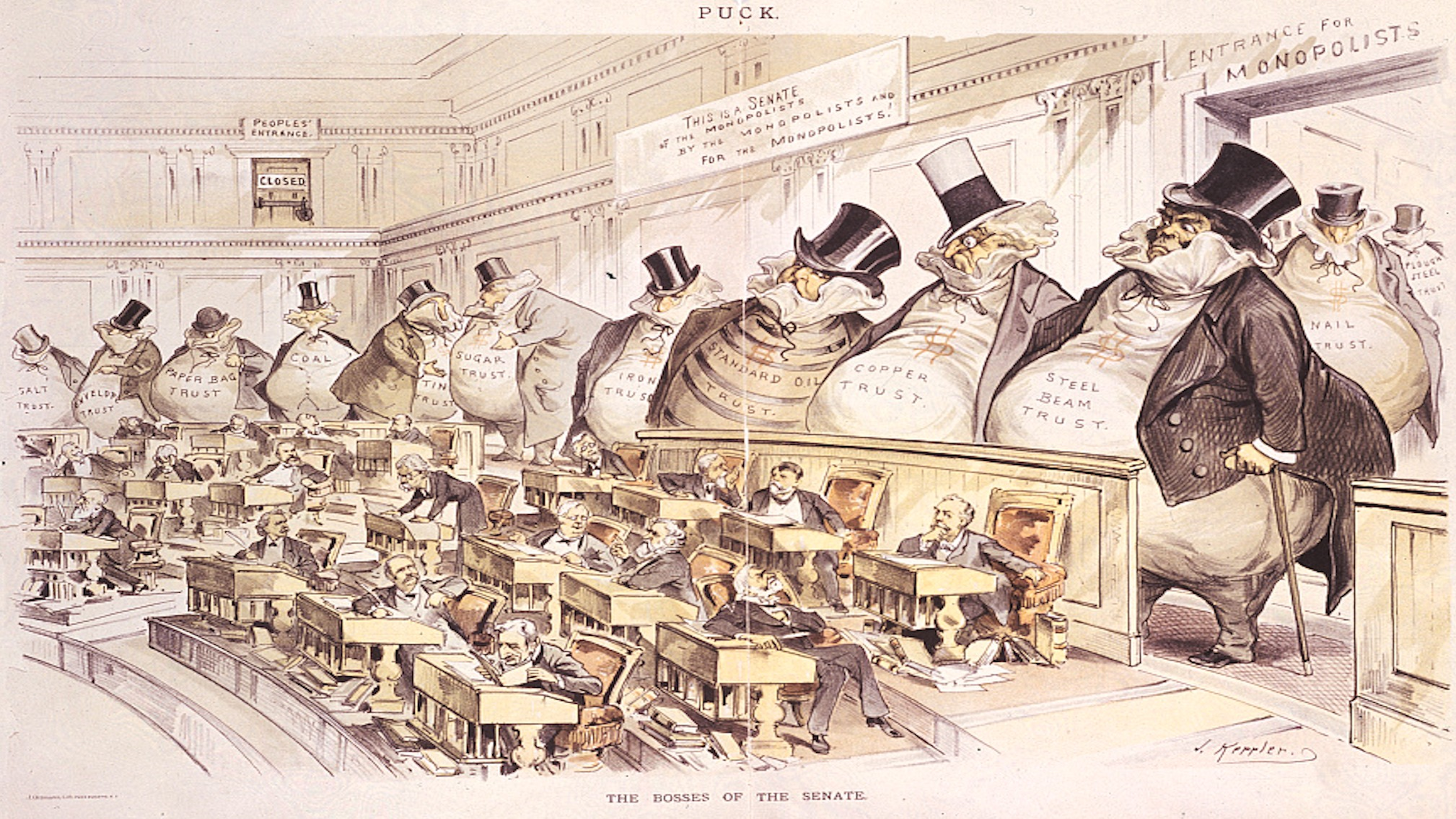
The last four years of antitrust policy has reversed course on 40 years of a Chicago School inspired goal of promoting a "consumer surplus" in favor neo-Brandeisian"anti-bigness." In simplest terms, the Chicago School would ignore bigness, or firm profits, and only consider whether consumers are better off, for example as could be the case with economies of scale. Neo-Brandeisians' main argument is that this static calculation does not include all of the possible harm from bigness because bigger post-merger firms are better at skewing laws and regulation in their favor to the harm of consumers, for example by erecting legal entry barriers.
Most academic antitrust economists, on the left and on the right, embraced the Chicago School thinking as more and more carefully conducted studies provided evidence for the ideas. The evidence for the Neo-Brandeisian view has largely been speculative. But recently, Cowgill, Prat, and Valletti have provided a model and some evidence that merging firms significantly increase their post-merger lobbying expenditures. This is not conclusive but it is a start. We still do not know if this lobbying effort tips the scales or is in response to a knee-jerk anti-bigness bias. But it is a welcome contribution. The future of antitrust policy should be settled by evidence and not polemics.
Friday, June 28, 2024
Tractor Supply Ditches DEI, ESG After Online Attacks
We will review and consider revising our current DEI goals while still ensuring a respectful environment. [Diversity, Equity, Inclusion]
Withdraw our data on emissions and focus on our land and water conservation efforts. [ESG=Environmental, Social, Governance]
See also:
Wednesday, June 26, 2024
Higher interest rates in the US strengthen $ (or depreciate ¥)
Economist: The Japanese yen fell to around ¥160 against the dollar, its weakest level in almost 40 years. The currency has been falling because of the large gap in interest rates between Japan and America.
- Investors earning 1% in Japan liquidate their investments, sell ¥ to buy $ to invest in the US where they can earn 5%; or
- Carry Trade: Investor's borrow in Japan, sell ¥ and buy $ to invest in the US and earn money on the spread between the cost of borrowing (1%) in ¥ and what they earn on $ investments (5%).
In both cases, the increase in demand for $ drives up the price of a $ (FX) relative to the ¥.
Tuesday, June 25, 2024
Why are house prices increasing?
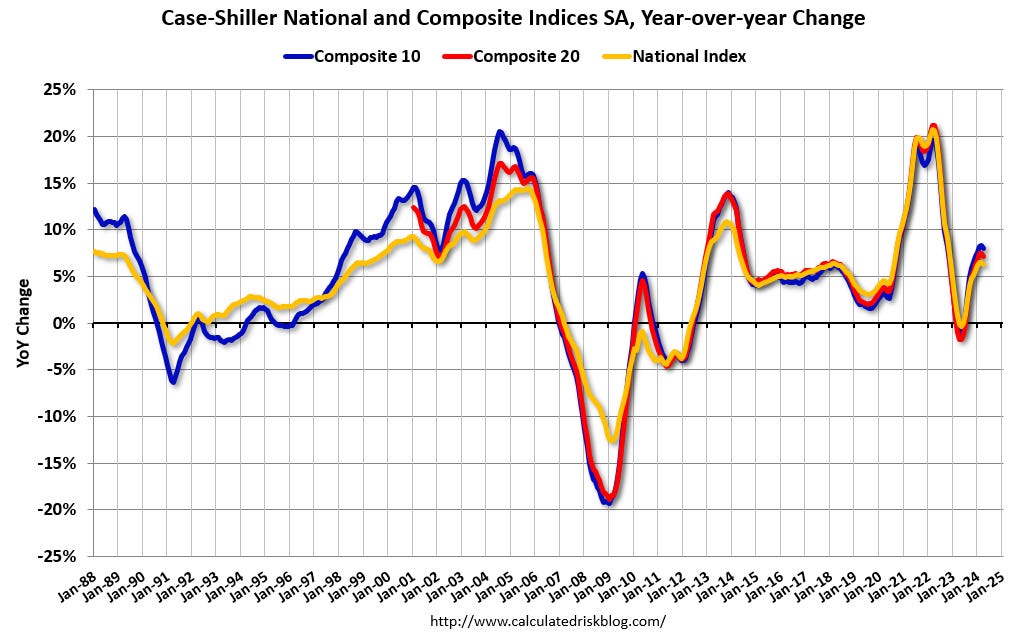
It is likely that high mortgage rates are causing existing homeowners with low interest rate (3%) mortgages to stay in their current homes rather than buy new houses which would require taking out new mortgages at 7%. This means that the supply of homes for sale is very low which drives up the price.
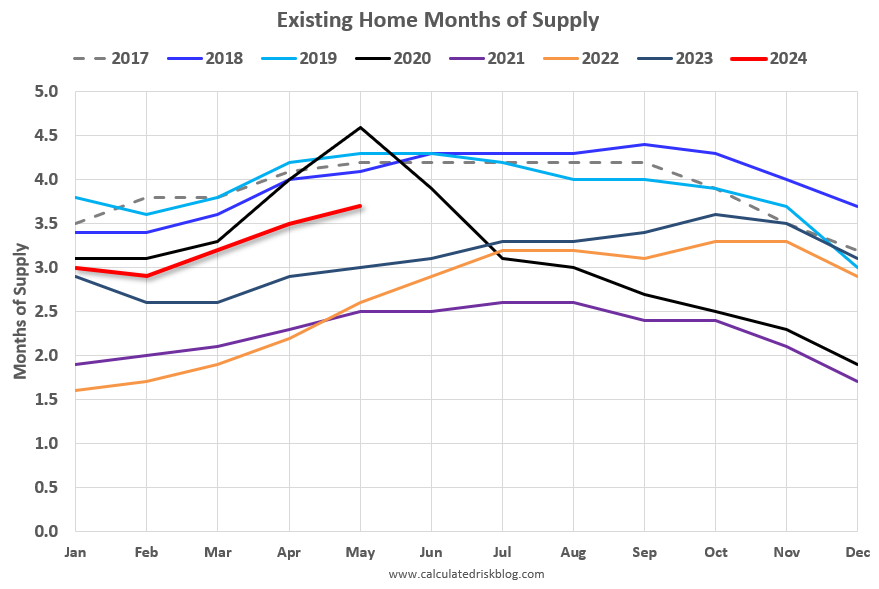
Note that the supply of homes is usually measured by "months of inventory" which is calculated by asking "at the current rate of sales, how many months would it take to sell all the houses currently for sale?" In the graph below, we see a negative relationship between months of inventory and the change in house prices. When months of inventory is below 6 months, prices are likely to increase, and vice-versa.

Currently there are four months of supply in the US. But market definition matters here. Most real estate markets are local, so it would be best to measure months of supply locally.
Subscribe to:
Posts (Atom)