fixing, controlling, or maintaining the retail price of women’s footwear, as well as from coercing or pressuring any dealers to maintain, adopt, or adhere to any resale price. According to the petition, the June, 2007 U.S. Supreme Court decision in Leegin Creative Products ... “constituted a dramatic change in antitrust law and requires that the order now be reexamined.” Nine West’s petition also states that ... the Leegin ruling has put it at an unfair competitive disadvantage because it is prohibited from entering into minimum resale price maintenance agreements now available to its competitors.The aai is opposed.
Showing posts sorted by relevance for query resale price. Sort by date Show all posts
Showing posts sorted by relevance for query resale price. Sort by date Show all posts
Thursday, December 6, 2007
Nine West wants to set minimum resale prices
Businesses are beginning to react to the Supreme Court's Leegin decision (Will Resale Price Maintenance Return?; Amicii brief of economists; PNG's brief ). In 2000, the FTC convicted Nine West of vertical price fixing, and prohibted them from

Tuesday, November 29, 2022
Will Resale Price Maintenance Return?
[Orignally posted in 2007], the Supreme Court removed the blanket prohibition against retail price agreements between manufacturers and retailers. PING (the golf club manufacturer) submitted an amicus brief in the case that detailed how difficult it is to prevent discount retailers from free riding on the custom fitting services of full service retailers.
The discount retailers were advising consumers to visit a full-service retailer to request a custom-fitting session, and then bring the specifications for custom-made clubs back to the discounter.
PING could control this kind of opportunistic behavior only by dropping dealers, a very costly option. [For an economic analysis of resale price maintenance, see the amicii brief of 24 antitrust economists--full disclosure: I am one of the 24].
Now PING has another option, minimum resale price maintenance. The federal legality of these agreements will now be determined under a rule of reason. However, it is likely that those states more inclined towards regulation, like California and New York, will try to "repeal" the Supreme Court decision with state legislation, setting up a conflict between state and federal antitrust laws.
Now PING has another option, minimum resale price maintenance. The federal legality of these agreements will now be determined under a rule of reason. However, it is likely that those states more inclined towards regulation, like California and New York, will try to "repeal" the Supreme Court decision with state legislation, setting up a conflict between state and federal antitrust laws.
This just in: some manufacturers are suing retailers who sell merchandise on eBay at a discount.
Monday, December 3, 2012
REPOST: Will resale price maintenance return?
In 2007, the Supreme Court removed the blanket prohibition against retail price agreements between manufacturers and retailers. PING (the golf club manufacturer) submitted an amicus brief in the case that detailed how difficult it is to prevent discount retailers from free riding on the custom fitting services of full service retailers. The discount retailers were advising consumers to visit a full-service retailer to request a custom-fitting session, and then bring the specifications for custom-made clubs back to the discounter. PING could control this kind of opportunistic behavior only by dropping dealers, a very costly option. [For an economic analysis of resale price maintenance, see the amicii brief of 24 antitrust economists--full disclosure: I am one of the 24].
Now PING has another option, minimum resale price maintenance. The federal legality of these agreements will now be determined under a rule of reason. However, it is likely that those states more inclined towards regulation, like California and New York, will try to "repeal" the Supreme Court decision with state legislation, setting up a conflict between state and federal antitrust laws.
This just in: some manufacturers are suuing retailers who sell merchandise on eBay at a discount.
Tuesday, October 23, 2012
Aussies Find Cosmetics Firm Guilty of RPM
The Australian Competition and Consumer Commission (ACCC) has clamped down on so-called "resale price maintenance" (RPM) by Eternal Beauty Products. In this case, the cosmetics maker pressured online retailers to either sell goods at certain prices or risk being cut off altogether. Most countries have had some sort of anti-RPM law on the books. At first blush, it seems quite obvious that that a manufacturer requiring a retailer to set higher prices must not be in the public interest. Until, you ask a simple question, "Why would manufacturers do this?"
- If the manufacturer was a monopolist, it might be a way of getting higher final prices. But, why not simply raise the wholesale price? Given the wholesale price, the manufacturer should want as low a retail price as possible to sell as many units as possible. Anyway, in this this case, like most, the manufacturer was one of many competitors.
- If the industry was oligopolistic, the manufacturers may be collectively using retailers to enforce higher prices. This could be a way to reduce rivalry. But then all cosmetic firms would be party to the deal and they would have to impose price restraints on all retail channels. This appears to have been far from the case.
- If the product was new or differentiated and the target market was poorly informed about the product's characteristics relative to competitors, the manufacturer may want to encourage point-of-sale (POS) services. Retail sales associates may be uniquely positioned to demonstrate why this product might be preferred. But this imposes costs on the retailers who perform these POS services. They may be willing to do so for a higher margin. But not if some online retailer offers the same product without the POS services at a discount. Customers will may make an initial purchase with the full service retailer and then shift orders to the cheaper online vendor. In this case, no retailer will be willing to offer the POS services and suffer the free-riding by online discounters. Without POS services, the product fails. To counter this, the manufacturer bans discounting by setting a minimum retail price that includes enough of a margin that retailers want to offer the POS services. In this theory of RPM, customers benefit from small manufacturers bringing new and innovative products to the market. Too bad the ACCC got in the way.
Wednesday, March 18, 2015
Power tool importer prevents free-riding with RPM
Resale Price Maintenance, or RPM, is a contractual arrangement between an upstream manufacturer (or importer) and a downstream retailer that specifies either a minimum or maximum retail price. These contracts are illegal in most antitrust jurisdictions, and viewed skeptically in the others.
So it was somewhat of a surprise that Australia's Competition and Consumer Commission (ACCC) allowed Tooltechnic, an importer of high end power tools, to specify a minimum resale price to prevent "free riding" by discount dealers on its high end Festool brand. Consumers had been shopping at the high end retailers, and then buying the Festool products are lower-priced retailers who did not provide as much retail service.
Festool products are complex, with a high level of features and functions, and are aimed predominantly at professional users. Tooltechnic believed that provision of retail services such as pre-sales technical advice, product demonstrations, and “try-before-you-buy” arrangements, as well as post-sales services such as customer training and provision of consumables and accessories, would help to expand demand for the brand even if retail prices included a margin sufficient to fund those services.
However, retailers who provided these services were increasingly losing out to competitors who chose a simpler no-frills model, and the problem of free-riding was exacerbated by the increased accessibility of on-line sales. Tooltechnic chose RPM as a solution after judging that other approaches, such as imposing detailed contractual obligations on retailers, granting exclusive retailer territories, or restricting on-line sales permissions, would be unworkable or less effective as a means of boosting sales.
Congrats to the the ACCC for reaching a reasonable decision, and to the Economists at RBB for their role in educating a skeptical government agency.
Tuesday, November 16, 2010
Revisiting Resale Price Maintenance
We've blogged previously on the issue of resale price maintenance and the US Supreme Court's 2007 decision that removed the blanket prohibition against retail price agreements between manufacturers and retailers.
According to today's Wall Street Journal, the losing party in that case is again asking the Court to review the issue. They claim that lower courts have gone too far in applying the 2007 ruling.
According to today's Wall Street Journal, the losing party in that case is again asking the Court to review the issue. They claim that lower courts have gone too far in applying the 2007 ruling.
Monday, December 10, 2012
REPOST: consult an economist before buying a wedding dress
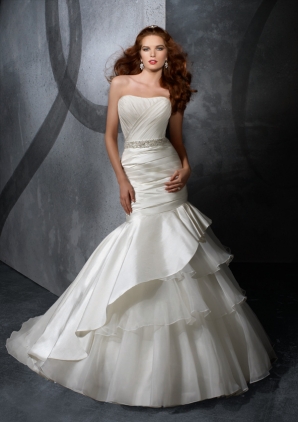
When
Stephanie (her name has been changed to avoid embarrassment) went
shopping for a wedding and bridesmaid dresses, she found valuable advice
from an unusual source, Chapter 23 of her favorite economics text. And it was not about sleeve options, figure flattery, or bustles.
She
was puzzled that over half of the stores that sell wedding dresses do
not permit photos, and do not have tags in the dresses that would
identify the manufacturer and style type.
These retail stores want to prevent customers from "free riding" on their fitting and display services:
I just spoke with someone who had all her bridesmaids sized in the store only to go online and buy them from a discount site. I would assume many of the brides are doing this as well.
Note that this is not just a problem for the store, but also a problem for the dress manufacturer: if stores cannot prevent free-riding, they will invest less in point-of-sales fitting services, and dress sales will suffer. See our earlier post about golf club manufacturer PING, who faced a similar problem,
The discount retailers were advising consumers to visit a full-service retailer to request a custom-fitting session, and then bring the specifications for custom-made clubs back to the discounter. PING could control this kind of opportunistic behavior only by dropping dealers, a very costly option.
PING wanted to set a minimum retail price (called "retail price maintenance") to address the problem. The minimum price meant that discount retailers could not undercut full service retailers. The antitrust laws prevented this until the Supreme Court changed the case law.
For the wedding dresses, the no-photos policy created a problem for Stephanie because she wanted to photograph her bridesmaids in each of the dresses to make sure that they choose the best dresses for the wedding. So she chose to purchase from a large retail chain, like J. Crew, BCBG, Ann Taylor, or Nordstrom’s because they had solved the free riding problem, using exclusives, where only one chain carries the style.
For an economic analysis of resale price maintenance, see the amicii brief of 24 antitrust economists (I am one of the 24.)
UPDATE: Amazon just made free riding a lot easier.
Saturday, December 3, 2022
Consult an economist before buying a wedding dress

When Stephanie (her name has been changed to avoid embarrassment) went shopping for a wedding and bridesmaid dresses, she found valuable advice from an unusual source, Chapter 23 of her favorite economics text. And it was not about sleeve options, figure flattery, or bustles.
She was puzzled that over half of the stores that sell wedding dresses do not permit photos, and do not have tags in the dresses that would identify the manufacturer and style type.
These retail stores want to prevent customers from "free riding" on their fitting and display services:
I just spoke with someone who had all her bridesmaids sized in the store only to go online and buy them from a discount site. I would assume many of the brides are doing this as well.Note that this is not just a problem for the store, but also a problem for the dress manufacturer: if stores cannot prevent free-riding, they will invest less in point-of-sales fitting services, and dress sales will suffer. See our earlier post about golf club manufacturer PING, who faced a similar problem,
The discount retailers were advising consumers to visit a full-service retailer to request a custom-fitting session, and then bring the specifications for custom-made clubs back to the discounter. PING could control this kind of opportunistic behavior only by dropping dealers, a very costly option.PING wanted to set a minimum retail price (called "retail price maintenance") to address the problem. The minimum price meant that discount retailers could not undercut full service retailers. The antitrust laws prevented this until the Supreme Court changed the case law.
For the wedding dresses, the no-photos policy created a problem for Stephanie because she wanted to photograph her bridesmaids in each of the dresses to make sure that they choose the best dresses for the wedding. So she chose to purchase from a large retail chain, like J. Crew, BCBG, Ann Taylor, or Nordstrom’s because they had solved the free riding problem, using exclusives, where only one chain carries the style.
For an economic analysis of resale price maintenance, see the amicii brief of 24 antitrust economists (I am one of the 24.)
UPDATE: Amazon just made free riding a lot easier.
Wednesday, December 4, 2013
REPOST: Consult an economist before buying a wedding dress
When
Stephanie (her name has been changed to avoid embarrassment) went
shopping for a wedding and bridesmaid dresses, she found valuable advice
from an unusual source, Chapter 23 of her favorite economics text. And it was not about sleeve options, figure flattery, or bustles.
She
was puzzled that over half of the stores that sell wedding dresses do
not permit photos, and do not have tags in the dresses that would
identify the manufacturer and style type.
These retail stores want to prevent customers from "free riding" on their fitting and display services:
I just spoke with someone who had all her bridesmaids sized in the store only to go online and buy them from a discount site. I would assume many of the brides are doing this as well.
Note that this is not just a problem for the store, but also a problem for the dress manufacturer: if stores cannot prevent free-riding, they will invest less in point-of-sales fitting services, and dress sales will suffer. See our earlier post about golf club manufacturer PING, who faced a similar problem,
The discount retailers were advising consumers to visit a full-service retailer to request a custom-fitting session, and then bring the specifications for custom-made clubs back to the discounter. PING could control this kind of opportunistic behavior only by dropping dealers, a very costly option.
PING wanted to set a minimum retail price (called "retail price maintenance") to address the problem. The minimum price meant that discount retailers could not undercut full service retailers. The antitrust laws prevented this until the Supreme Court changed the case law.
For the wedding dresses, the no-photos policy created a problem for Stephanie because she wanted to photograph her bridesmaids in each of the dresses to make sure that they choose the best dresses for the wedding. So she chose to purchase from a large retail chain, like J. Crew, BCBG, Ann Taylor, or Nordstrom’s because they had solved the free riding problem, using exclusives, where only one chain carries the style.
For an economic analysis of resale price maintenance, see the amicii brief of 24 antitrust economists (I am one of the 24.)
UPDATE: Amazon just made free riding a lot easier.
Thursday, November 1, 2007
Antitrust priorities of the next adminstration?
In previous posts (Will Resale Price Maintenance Return?), we have argued that contracts between manufacturers and retailers, like the contracts between PING and its golf stores, serve to align the incentives of retailers with the goals of the manufacturer.
With Clinton futures trading at $0.71, we get a glimpse of a what a Clinton antitrust policy might look like. Senators Kohl, Biden, and Clinton introduced a bill that would prohibit manufacturers and retailers from contracting on price:
With Clinton futures trading at $0.71, we get a glimpse of a what a Clinton antitrust policy might look like. Senators Kohl, Biden, and Clinton introduced a bill that would prohibit manufacturers and retailers from contracting on price:
The Discount Pricing Consumer Protection Act (s 2261) will ... simply add one sentence to Section 1 of the Sherman Act--the basic provision addressing combinations in restraint of trade--a statement that any agreement with a retailer, wholesaler or distributor setting a price below which a product or service cannot be sold violates the law. No balancing or protracted legal proceedings will be necessary. Should a manufacturer enter into such an agreement it will unquestionably violate antitrust law.
Saturday, December 14, 2024
Acquired Podcast: Costco
Listening to the Aquired podcast about Costco. Lots of interesting history and economics in it.
- The start of discount retailing by figuring out how to skirt manufacturer RPM's (resale price minimums) with the "club format," Fed-co (nonprofit) to Fed-mart (
- The first US Hypermarket, idea imported from France
- How Costco evolved from retail to wholesale warehousing, where manufacturers take care of all the logistics: once a pallet is dropped off, it is immediately available for sale.
- To Price club, which opened up to credit union members as a benefit, which had a huge word-of-mouth advertising.
- Limiting # SKU's (#products=3800) to increase volume and get lower prices from manufacturers.
- To adding hot dogs from Hebrew National, $1.50 for hotdog and a drink, Costco's only loss leader
- Costco turns inventory 12x/year, where vendors finance Costo's inventory because it sells faster than the payment terms (pay manufacturers within 30 days).
- To two-part pricing (selling at MC and making money on the membership fees).
- Costco clones: Wal-mart, Home Depot, Starbucks
HT: Charles
Friday, May 18, 2018
Squeezing Scalpers is Backward Integration
The WSJ reports that scalpers are less important to Taylor Swift's current "Reputation" tour. About 3% of the tickets find their way to stubhub versus the usual 30%-50%. Previously, scalpers would purchase tickets to performances by high demand artists and resale these tickets at a markup. In essence, the promoter "outsourced" the task of price discrimination to scalpers. Scalpers were able to capture a margin but bore the risk of unsold seats. Since there is virtually free entry into scalping, I suspect they earn very small economic profits. Promoters would be happy with this if scalpers were better at price discrimination and so were able to pay higher prices up front.
But CRM technology has come to concert promotion. Taylor Swift's promoters now have the edge in ferreting out which fans are less price elastic.
By exploiting this information, they can publicize discounts to hardcore fans while raising overall prices.
Dress it up as cutting out the middleman but this tour "has already grossed 15% more." This is because her organization is now even better at price discrimination than these middlemen had been.
"The primary market has been ceding pricing control to secondary markets," said David Goldberg, a former senior Ticketmaster executive.
But CRM technology has come to concert promotion. Taylor Swift's promoters now have the edge in ferreting out which fans are less price elastic.
For the current Taylor Swift tour, would-be concertgoers were encouraged to register for Ticketmaster's Verified Fan program months before tickets went on sale. They could boost their standing in the ticket queue by watching music videos and purchasing the "Reputation" album or merchandise. Users then received codes that allowed them the chance to purchase discounted tickets over a six-day presale period.
By exploiting this information, they can publicize discounts to hardcore fans while raising overall prices.
The best seats--some with added VIP perks--cost $800 to $1,500 at face value for a given show, with those immediately behind them at $250 each. Spots in the back of the house go for about $50. Regular tickets for Ms. Swift's tour three years ago cost about $40 to $225, according to Pollstar data
Dress it up as cutting out the middleman but this tour "has already grossed 15% more." This is because her organization is now even better at price discrimination than these middlemen had been.
Monday, June 7, 2010
More on MLB Price Discrimination
Add the San Francisco Giants to the list of Major League Baseball teams trying to increase profits through price discrimination (we previously highlighted the Cubs and the Orioles). The Giants use a software package developed by Qcue:
[the software] helps the Giants price baseball games in much the same way airlines manage seat prices to keep planes full. Kahn's company, Qcue (pronounced "Q-Q"), crunches numbers on dozens of variables to determine prices that will get the largest number of fans into the stands. The software helps the Giants set prices based on past ticket sales, the day and time of the game, the teams' records, the pitching match-up, the weather, the going rate on resale Web sites like StubHub, and other data.
Sunday, December 11, 2011
Consult an economist before buying ski boots
It turns out that ski boots require point-of-sales fitting services, similar to those required to sell wedding dresses and golf clubs. But rather than using exclusivity and resale price maintenance to eliminate competition from discounters, ski and boot shops have started charging customers $25-$50 for boot fittings, but only if they end up purchasing elsewhere.
I wonder if this is enough. Boots that sell for $600 in a retail ski shop, can sell for $372 online.
HT: Jay
I wonder if this is enough. Boots that sell for $600 in a retail ski shop, can sell for $372 online.
HT: Jay
Subscribe to:
Posts (Atom)