Showing posts sorted by relevance for query maduro. Sort by date Show all posts

Tuesday, December 8, 2015

What happens when you ignore lessons from Managerial Economics?

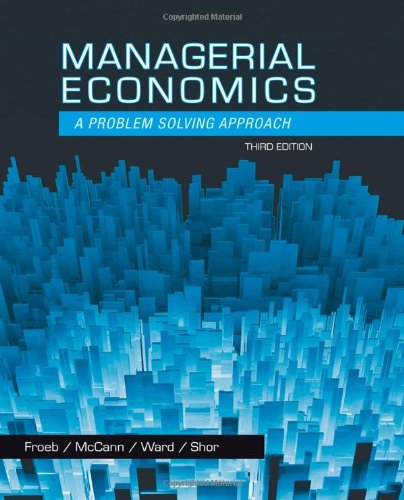
Venezuela's mistakes are familiar fodder to readers of this blog.  Things got so bad in Venezuela that in 2013, I even sent President Maduro a copy of the third edition, and urged him to read chapter two, to help him understand why Venezuela was running out of toilet paper and used cars.


“We’re in a state of constant deterioration,” said Juan Pablo Hidalgo, a 27-year-old hotel worker who voted on Sunday against Mr. Maduro’s allies in hope of economic improvement. “In any other country, people can save. Here, no one in my generation can save anything, much less have hopes of owning a car or a house.”

This is what happens when you don't study economics.  I wrote to President Maduro asking him for a plug that I can put on the cover of the fifth edition, "I should have read this book."

Friday, August 16, 2013

President Maduro didn't read Chapter 2

In May, I sent a copy of my third edition textbook to President Maduro, to help him understand why his country ran out of toilet paper

Now Venezuela is running out of used cars:

With new car prices carefully controlled, import dollars strictly limited, and demand for wheels way outstripping supply, Venezuela must be one of the only places in the world where cars raise in value the second they move off the lot. With people forced to turned to fix assets to protect the value of their savings, waiting lists for new cars have grown notoriously long. These days, new cars are just another arbitrage opportunity; a steel-rubber-and-glass version of a CADIVI dollar.

This book can help.  Please encourage him to read chapter 2.

HT:  Jamie

Saturday, February 13, 2016

Dispatches from Venezuela: Price controls destroy wealth, and lives

In Venezuela, stories of economic meltdown, as the socialist policies of President Maduro have had there predictable effects:

 CARACAS, Venezuela—In a hospital in the far west of this beleaguered country, the economic crisis took a grim toll in the past week: Six infants died because there wasn’t enough medicine or functioning respirators.

 Here in the capital, the crisis has turned ordinary life into an ordeal for nearly everyone. Chronic power outages have prompted the government to begin rationing electricity, darkening shopping malls. Homes and apartments regularly suffer water shortages.

....

The National Assembly, now controlled by the opposition, declared a food emergency on Thursday—an attempt to spur the government of President Nicolás Maduro to, among other things, ease price controls that have created shortages of everything from medicine to meat.

 “The people are being left without the ability to feed themselves,” said lawmaker Omar Barboza.

Tuesday, January 6, 2026

Why is the Venezuelan stock market up over 100% following US hostilities?

Under Maduro's "socialism of the 21st century," ... Venezuelans resorted to eating dogs and scavenging trash to survive.


  Marginal Revolution:  In expected value terms, the people of Venezuela are now much better off.

Tuesday, November 10, 2020

I am sending the Pope a copy of my textbook


From the Pope's Encyclical "Fratelli Tutti" ("Brothers All"):
The Pope also makes no secret of his opposition to the global capitalist free market economy. He proposes instead that wealthy countries form a seamless bond with the have-not peoples of the global south. ... The problem with redistribution, of course, is, as Margaret Thatcher famously said, "Soon you run out of other people's money." After everyone has been made equally medium-poor, then where, without incentives for hard work and production, are further disbursements supposed to come from?  

Hopefully, the Pope will at least read Chapters 1 and 2 as he makes the implicit assumption that no one will respond to the perverse incentives he proposes, but I am not hopeful.  When I sent a free copy of the 3rd Edition to President Maduro (I even signed it), his country went into freefall (past posts about Venezuela).

Monday, November 11, 2013

Long run vs. short run

President Maduro is trying to win re-election so he seized the biggest electronics store and held a "sale."

In the short run, people get cheap stuff and they are happy.  But in the long run, he has reduced the incentive of retail outlets to serve people. 

This summer, I warned him about these kinds of policies, and I even sent him an autographed copy of my textbook.

Someone please get him to read chapter two. 

Friday, May 17, 2013

I am sending the President of Venezuela a copy of the 3rd edition textbook

Dear President Maduro,

I read about your efforts to make peace with the grocery stores to help alleviate shortages.  The toilet paper shortage seems particularly acute:

Government officials said this week they plan to immediately import food and 50 million rolls of toilet paper to keep up supplies. 

Increasing imports and government-set prices may work in the short run, but you will soon find yourself right back in the same position.  Government-administered prices cannot adjust fast enough to keep up with changing demand.

Over the years, I have taught many students from your country and they learn (spelled out clearly in Chapter 2), that voluntary transactions create wealth, and that price controls, taxes, and subsidies destroy wealth. 

I am going to send you a copy of my brand new third edition.  It is easy to read and will teach you to anticipate the consequences of various government policies that you might pursue.

If you cannot wait for the hard copy, you can buy an electronic version from Cengage, from Amazon, or from Barnes and Noble.

Please contact me if you have any questions.

Sincerely,

Professor Luke Froeb
Vanderbilt University

Thursday, August 15, 2024

VP Harris advocates price controls, so I am sending her a copy of my textbook.

TRUTH IN BLOGGING: I was political appointee in the Trump administration (Chief Economist of the Antitrust Division).

VOX on regulating rents:
Harris’s remarks to cap rents echoed a recent proposal from the Biden administration just two weeks earlier to limit rent hikes to 5 percent nationwide over the next two years for all landlords who own more than 50 units. (They estimate this would cover over 20 million units across the country.) The Biden plan — which would require congressional approval — would exempt not-yet-built units, so as to not discourage much-needed new housing. The two-year rent cap, Biden officials said, would serve as a way to drive down costs while new housing was under construction.
Harris’s seeming embrace of the Biden plan isn’t the first time she’s expressed support for rent control. In 2019, after Oregon adopted a then first-of-its-kind statewide rent control measure, she tweeted in praise of the bill signing. “No one should ever have to choose between paying their rent each month or feeding their children,” Harris wrote. As a senator, she also introduced legislation to offer tax relief to renters who earned less than $100,000 if they spent more than 30 percent of their income on rent and utilities.
ANALYSIS: 
  • Chapter 2: Voluntary transactions create wealth by moving assets to higher valued uses. Price controls deter some transactions by limiting the range of agreements between sellers and buyers. 
  • Chapter 8: With a price ceiling below the market clearing price, there will be more buyers than sellers. Who gets to buy?  In Sweden, politically connected buyers are more likely to be chosen.
  • Chapter 9: In the long run, assets will exit the industry, or new supply will not enter, exacerbating the very problem (high prices) the price controls were designed to solve.  Although VP Harris seems to be aware of this problem, she thinks she can solve it by creating an exception for new supply. However, would-be builders will wonder how long before their new supply becomes old and subject to the controls?  
  • And don't forget the increase in the number of government bureaucrats to enforce the new rules.

RELATED:  This is the third time I have had to send out an unsolicited copy of my textbook:  President Maduro (Venezuela, below), The Pope, and now VP Harris.

Here is the Washington Post’s Catherine Rampell on Harris’s price control policy:

It’s hard to exaggerate how bad this policy is. It is, in all but name, a sweeping set of government-enforced price controls across every industry, not only food. Supply and demand would no longer determine prices or profit levels. Some far-off Washington bureaucrats would. The FTC would be able to tell, say, a Kroger in Ohio the acceptable price it can charge for milk.