Monday, August 19, 2013

Sunday, August 18, 2013
Travelocity of Health care
Medibid allows hospitals to "dump" their unused capacity at much cheaper prices:
Hat tip: Matt (come by for a 3rd edition coffee mug)
A full knee replacement, which is billed at a rate of $50,000 or more can usually qualify for an insurance discount reducing the cost to $25,000. This same procedure can be done through MediBid at a cost of $10,000 in a US facility, or as low as $7,500 overseas. By allowing doctors in the US to compete on an equal playing field with overseas providers, the patient wins. MediBid harnesses the power of Domestic Medical Tourism.
Hat tip: Matt (come by for a 3rd edition coffee mug)
Friday, August 16, 2013
President Maduro didn't read Chapter 2
In May, I sent a copy of my third edition textbook to President Maduro, to help him understand why his country ran out of toilet paper

 Now Venezuela is running out of used cars:
This book can help. Please encourage him to read chapter 2.
HT: Jamie
With new car prices carefully controlled, import dollars strictly limited, and demand for wheels way outstripping supply, Venezuela must be one of the only places in the world where cars raise in value the second they move off the lot. With people forced to turned to fix assets to protect the value of their savings, waiting lists for new cars have grown notoriously long. These days, new cars are just another arbitrage opportunity; a steel-rubber-and-glass version of a CADIVI dollar.
This book can help. Please encourage him to read chapter 2.
HT: Jamie
Monday, August 12, 2013
Parking Meters and Yield Management
San Francisco has experimented by converting about a quarter of its parking meters to "smart meters" in which the price depends on current demand. SFpark, which uses the smart meters and ground sensors to measure parking occupancy and adjust prices accordingly, is providing valuable lessons for San Francisco about reducing the amount of time drivers spend cruising the streets for a parking space.The people running the trial have published the first results here. This experiment also allowed them to calculate price elasticities at different locations and times.This one is taken from a blog entry about the paper.
 Hat tip: Mark Perry

Saturday, August 10, 2013
Cartel Enforcement
... is difficult even when the cartel is legal ... and participation is mandatory. NPR did a recent story on the implementation of agricultural cartels marketing orders. Some farmers will go to lengths to cheat on their allotment. Of course, this is the dominant strategy in the prisoner's dilemma. These cartels are endorsed by the USDA as a way to boost the income of farmers.
In the 1980s, the FTC started an investigation into applying the antitrust laws to these practices. If I recall correctly, Congress passed a law prohibiting the FTC from investigating or issuing a report. It is nice to have powerful friends.
Meet Marvin Horne, raisin farmer. Horne has been farming raisins on a vineyard in Kerman, Calif., for decades. But a couple of years ago, he did something that made a lot of the other raisin farmers out here in California really angry. So angry that they hired a private investigator to spy on Horne and his wife, Laura. Agents from a detective agency spent hours sitting outside the Hornes' farm recording video of trucks entering and leaving the property.
What did the Hornes do to become the subject of a surveillance campaign? They sold raisins. More specifically, they sold all the raisins they produced.
In the 1980s, the FTC started an investigation into applying the antitrust laws to these practices. If I recall correctly, Congress passed a law prohibiting the FTC from investigating or issuing a report. It is nice to have powerful friends.
Friday, August 9, 2013
Speeding Ticket Insurance
Anticipate adverse selection and moral hazard.
 Hat tip: Brandon Vanderford

Wednesday, August 7, 2013
How do you subsidize risk taking without encouraging more risk taking?
That is the goal of President Obama's plan to reform the mortgage industry:
He wants a housing finance system that has the government backing to provide cheap mortgages and dedicated off-budget funding for low-income constituencies. But he does not want subsidies that encourage bad housing decisions and leave the taxpayer on the hook for losses. In short, he wants the upside of the traditional system without the downside.

Tuesday, August 6, 2013
Are states and cities saving enough for the pensions?

Here is the scary bottom line:
In other words, Boston College found that unfunded liabilities may be almost double the official estimates despite applying a lower return assumption to just a piece of the overall calculation (in addition to eliminating asset smoothing). ....
For local and state government pensions and other post-retirement benefits, I suggest a rough rule of thumb of doubling the shortfalls found in official reports. Reality may prove worse than that, but let’s be optimistic.
We have blogged about over-optimistic pension assumptions. I hope I never have to tell our Mayor, "I told you so."
Monday, August 5, 2013
Burned by the Beanie Baby Bubble
Bubbles are visible to most people only with the benefit of hindsight. But with fads, even during the fad, most people understand that it will end. Some consumers simply enjoy the the ride while it is happening. They buy the leggings they saw in Flashdance. They get tickled by Elmo. They wear the pastels they see on Miami Vice. Few consumers view these fads as investment opportunities because they know it will collapse but they do not know when. Meet Chris Robinson Sr.:

Hat tip: Jeff Smith
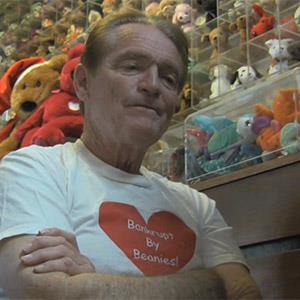
The one flaw in Robinson's financial plan -- and it's a big one -- is that he never sold any Beanie Babies while they were hot commodities. He still has thousands of them. Once that market crashed, odds are that he would have sold them at a loss had he tried to do so. With hindsight, Robinson seems to understand the error of his ways.
Hat tip: Jeff Smith
Subscribe to:
Posts (Atom)