From The Free Press:
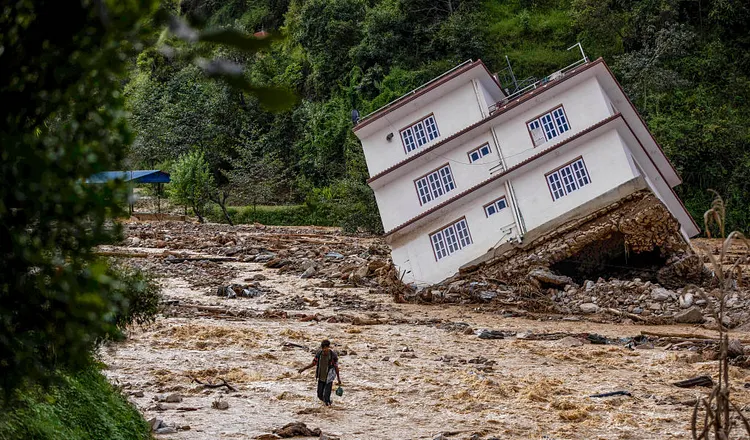
On August 26, a wall of rock and ice broke away from Langtang Lirung in the Himalayas, resulting in a massive flood and mudflow that killed thousands of people along the border of Nepal and Tibet. Less than a month later, on September 17, an influential organization called World Weather Attribution (WWA), housed at Imperial College London, published a report on the catastrophe along with a press release touting its alarming findings.What the WWA does:
Motivated Reasoning:WWA has not been shy about the fact that it produces its studies to influence the public and to promote climate advocacy. Authors of one of the WWA’s foundational papers openly acknowledged that a primary reason for creating their methods is political: by “increasing the ‘immediacy’ of climate change, thereby increasing support for mitigation.”Detection by Correlation and Attribution by Assumption...WWA treats “climate change,” measured as a smoothed record of global temperature, as the only possible cause of any localized trend in rainfall, heat, flooding, or other types of extreme weather.People are fooledThe WWA’s advocacy campaign has worked brilliantly, of course; 50 percent of Americans now believe policies addressing climate change would reduce the number or severity of the extreme weather events that they individually, or their communities, will experience.
Who funds these idiots?What the methodology should do (IPCC, Intergovernmental Panel on Climate Change):WWA’s funders are philanthropists: the Grantham Foundation, the European Climate Foundation, and the Bezos Earth Fund, three of the largest backers of climate advocacy in the world.
The first step is detection: whether the long-term statistics associated with a particular type of extreme weather change—a century of hurricane landfalls, say, or peak river flows—can’t be explained by the normal fluctuations in weather over years and decades, called internal climate variability. [COMMENT: this is extraordinarily difficult given the long run cycles in climate data]
The second step is attribution: The IPCC starts with a detected change and assesses the possible causes underlying that change—greenhouse gases, aerosols, volcanoes, land use, modes of climate variability, etc.—using sophisticated computer models of the earth’s climate system. [COMMENT: ruling out alternative explanations from non-experimental data is also extraordinarily difficult].
IPCC Findings:If lack of knowledge were the problem, I would send WWA a copy of Chapter 17: Making Decisions with UncertaintyThe scientific reality—long understood in mainstream climate science—is that any emissions policy a government adopts today will not noticeably reduce the frequency and intensity of extreme weather, through the lifetimes of children or their children’s children.
No comments:
Post a Comment